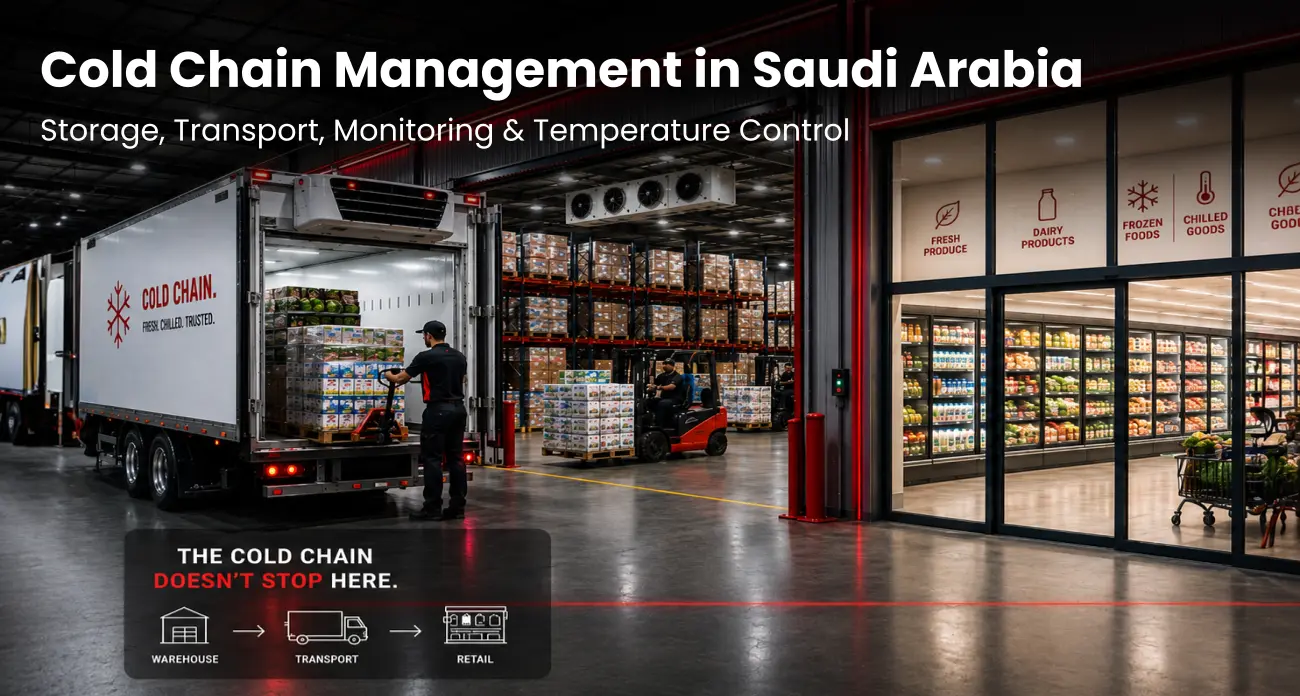
Cold Chain Management: Storage, Transport, Monitoring & Temperature Control
Cold chain management in Saudi Arabia involves maintaining the required temperature and handling conditions for temperature-sensitive products throughout storage, transportation, distribution and delivery. An effective cold chain combines properly designed cold storage, reliable refrigeration, temperature monitoring, suitable refrigerated transport, preventive maintenance and documented operating procedures.
For food, pharmaceuticals and other temperature-sensitive products, maintaining the required temperature is not simply a refrigeration requirement—it is an important part of protecting product quality, safety, shelf life and regulatory compliance. The Saudi Food and Drug Authority (SFDA) publishes requirements and guidance relevant to temperature-controlled storage and transport for regulated products, with requirements varying according to the product category and activity.
What Is Cold Chain Management?
A cold chain is a temperature-controlled supply network that protects products from the point of production or receipt until they reach their final destination.
A typical cold chain can include:
Production → Pre-cooling → Cold Storage → Loading → Refrigerated Transport → Distribution → Retail/End User
A failure at any stage can affect the integrity of the entire chain. For this reason, cold chain management requires coordination between refrigeration systems, warehouses, transport operators, monitoring systems and personnel.
The objective is not simply to make a product cold. It is to maintain the product's specified temperature conditions consistently throughout its journey.
Why Is Cold Chain Management Important in Saudi Arabia?
Kingdom of Saudi Arabia's climatic conditions make temperature control particularly important for temperature-sensitive products. High ambient temperatures can increase refrigeration loads and create additional risks during loading, unloading, transportation and temporary storage.
This makes proper cold-chain planning important for:
- Food and beverages
- Meat and poultry
- Dairy products
- Frozen foods
- Fresh produce
- Pharmaceuticals
- Vaccines and other temperature-sensitive healthcare products
- Laboratory and medical products
- Other temperature-sensitive goods
SFDA guidance for temperature-sensitive pharmaceutical products states that temperature-controlled rooms, cold rooms, freezer rooms, refrigerators and freezers should be capable of maintaining the required temperature range across the annual ambient conditions experienced at the storage location.
For food transport, SFDA's general requirements emphasise maintaining appropriate temperature and sanitary conditions during transportation in accordance with applicable Saudi and GSO requirements.
Cold Storage: The Foundation of the Cold Chain
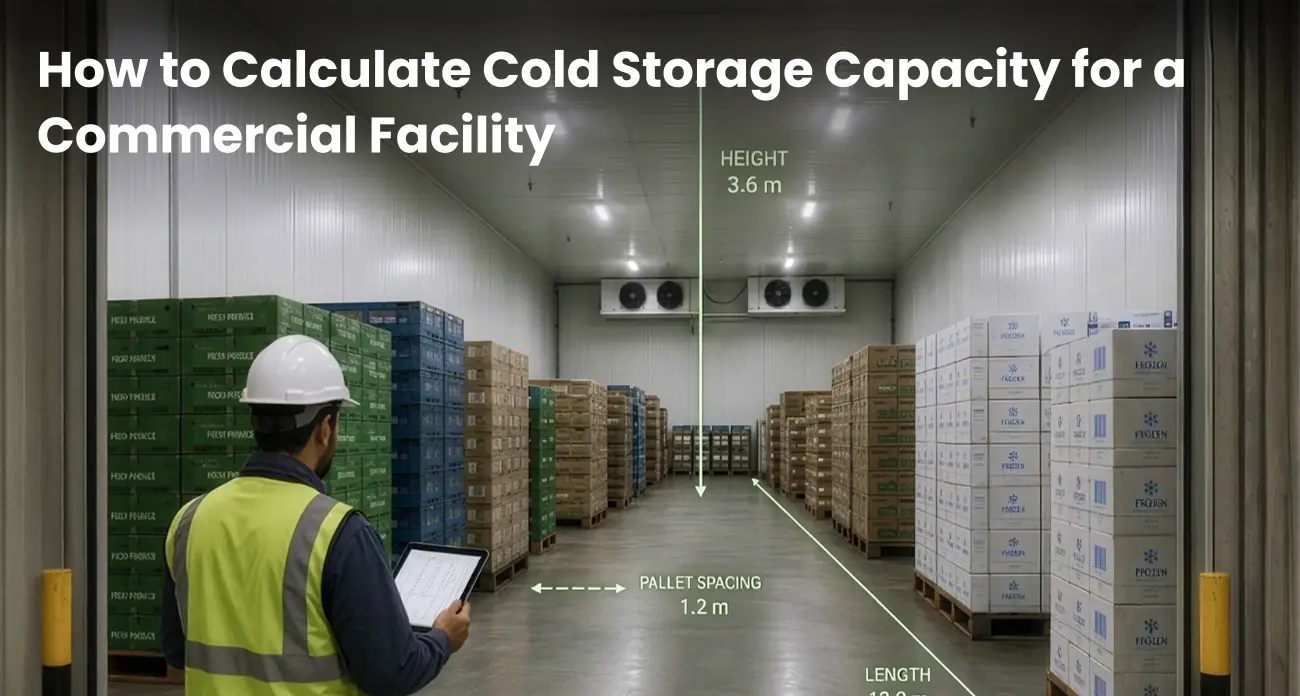
Cold storage is often the first major control point in a temperature-sensitive supply chain. A properly designed facility needs to maintain the required conditions while supporting efficient product movement and inventory management.
Depending on the application, facilities may include:
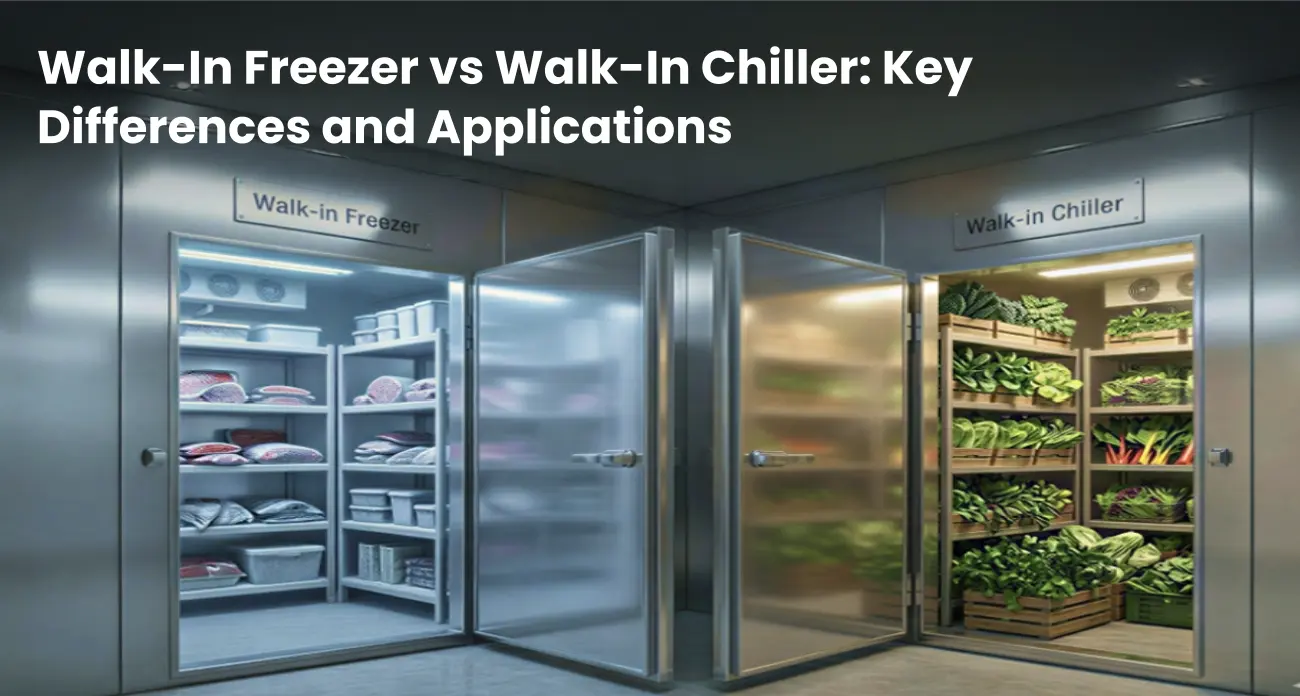
- Chilled rooms
- Freezer rooms
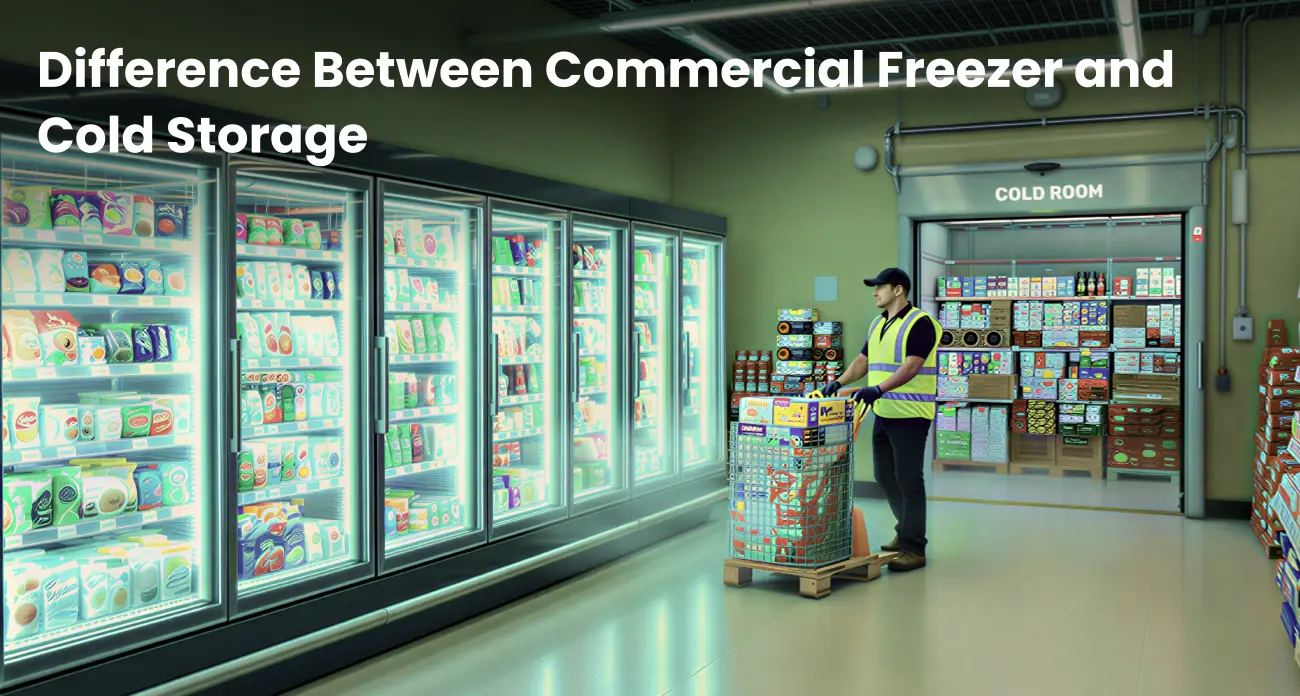
- Cold rooms
- Refrigerated warehouses
- Blast freezers
- Blast chillers
- Temperature-controlled distribution areas
Important cold-storage considerations
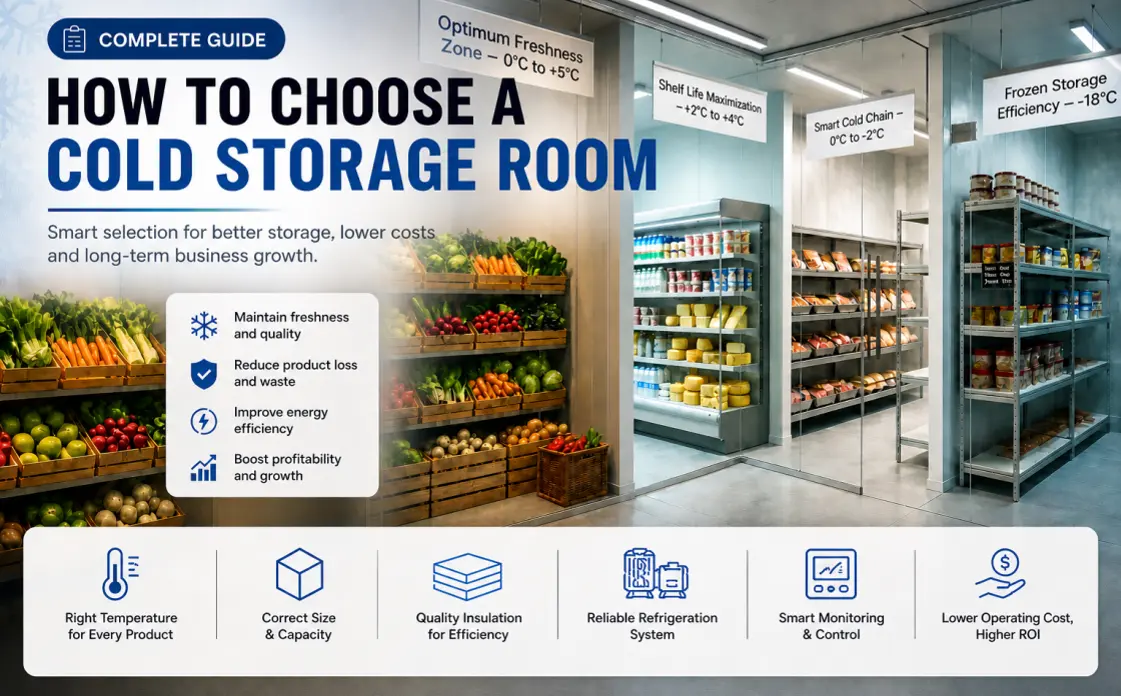
1. Correct temperature range
The storage temperature should be established according to the product's specifications and applicable requirements rather than applying one temperature to every product.
2. Insulation
Properly designed insulated panels, doors and building envelopes help reduce unwanted heat transfer and refrigeration load.
3. Refrigeration capacity
The refrigeration system should be selected according to the facility's actual cooling load, product load, ambient conditions, door openings and operating requirements.
4. Air circulation
Product arrangement should allow adequate circulation of cold air and avoid blocking evaporators or creating areas of excessive temperature variation.
5. Monitoring
Temperature should be monitored using appropriately calibrated systems, with sensor locations selected to represent areas where temperature control may be most challenging. SFDA guidance specifically addresses calibrated continuous temperature monitoring for temperature-controlled storage.
Refrigerated Transport in Saudi Arabia
Maintaining the correct temperature inside a warehouse is only one part of cold chain management. Products can experience temperature excursions during loading, transportation, unloading and delivery.
A refrigerated transport system may include:
- Refrigerated trucks
- Insulated containers
- Transport refrigeration units
- Temperature sensors
- Data loggers
- GPS and fleet monitoring
- Alarm systems
- Temperature records
SFDA states that chilled and frozen foods, as well as shipments requiring a specified transportation or storage temperature according to manufacturer instructions, should be provided with a temperature data logger activated from the time of shipping.
For time- and temperature-sensitive pharmaceutical products, SFDA guidance also emphasises transport conditions, route profiling and qualification, with transport methods selected according to anticipated ambient temperature and humidity conditions.
This is particularly important when transporting products across long distances or through locations with significant variations in operating conditions.
Temperature Monitoring and Control
Temperature monitoring provides visibility into what is happening throughout the cold chain.
A modern monitoring system can follow a process such as:
Sensor → Data Logger → Monitoring Platform → Alert → Corrective Action → Record
Instead of discovering a problem after a shipment arrives, continuous monitoring can help operators identify a temperature excursion while products are still within the supply chain.
A practical monitoring system should consider:
- Sensor accuracy
- Sensor calibration
- Monitoring frequency
- Data recording
- Alarm thresholds
- Remote alerts
- Data storage
- Reporting
- Corrective-action procedures
Monitoring is particularly important for regulated and high-value products because temperature records can provide evidence of whether required conditions were maintained.
However, monitoring alone cannot correct a refrigeration failure. It needs to be connected to an operational response plan.
What Causes Cold Chain Temperature Excursions?
A cold chain can fail because of technical, operational or human factors.
| Cause | Potential impact |
|---|---|
| Refrigeration equipment failure | Loss of temperature control |
| Poor insulation | Increased heat gain |
| Damaged door seals | Refrigeration losses |
| Excessive door opening | Temperature fluctuations |
| Incorrect loading | Poor air circulation |
| Overloading | Reduced cooling performance |
| Transport delays | Extended exposure |
| Sensor failure | Inaccurate monitoring |
| Poor maintenance | Unexpected breakdowns |
| Power interruption | Loss of refrigeration |
This is why cold chain management should be treated as an end-to-end operational system, rather than simply an equipment purchase.
Preventive Maintenance for Cold Chain Refrigeration
Preventive maintenance can help identify developing refrigeration problems before they become unexpected failures.
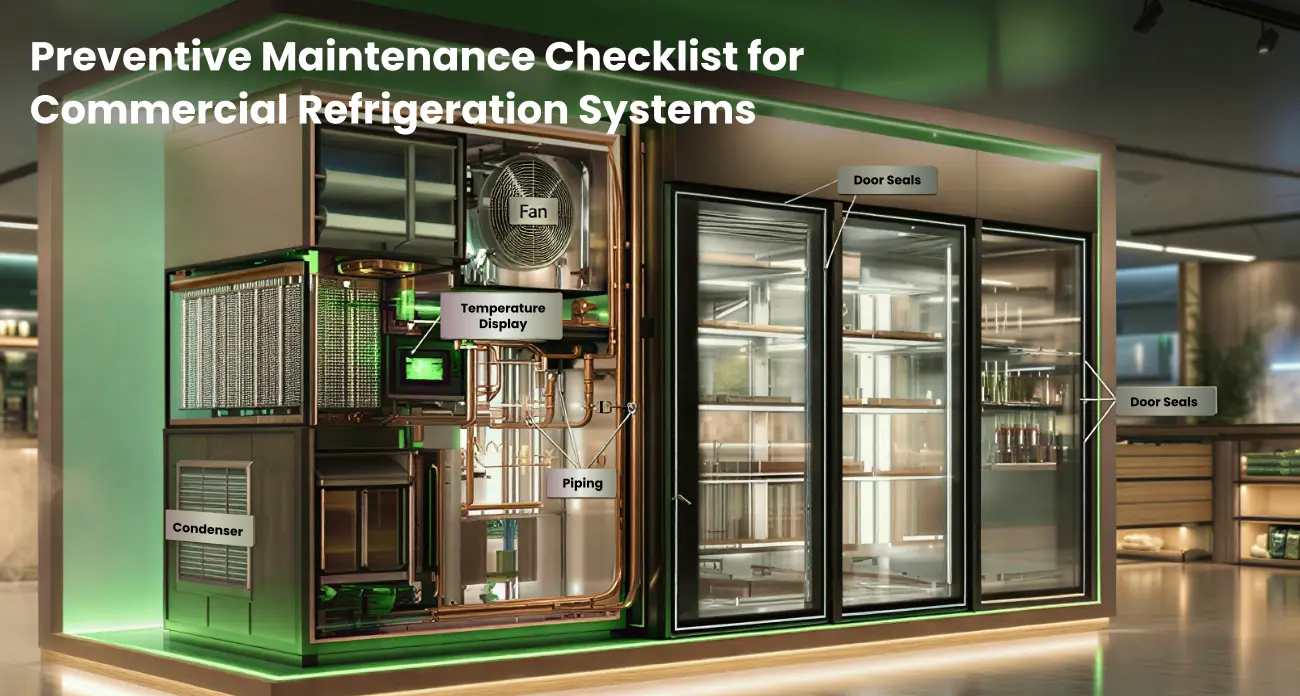
For cold rooms, warehouses and refrigerated facilities, maintenance programmes may include inspection of:
- Compressors
- Condensers
- Evaporators
- Refrigerant circuits
- Electrical components
- Controllers
- Temperature sensors
- Fans and motors
- Door seals
- Insulation
- Defrost systems
- Alarms and monitoring equipment
Maintenance frequency should be determined according to equipment type, operating conditions, manufacturer recommendations and the criticality of the application.
For businesses where a refrigeration failure can result in product loss or operational disruption, preventive maintenance should be integrated into the wider cold chain risk-management strategy.
Cold Chain Compliance in Saudi
Cold-chain operators should understand the requirements applicable to their specific product category and operation.
SFDA publishes requirements and guidance covering areas including food transport and storage and the storage and transport of time- and temperature-sensitive pharmaceutical products.
For example, SFDA's current FAQ states that temperature indicators/data loggers apply to chilled and frozen foods and to shipments requiring a specific transportation or storage temperature according to manufacturer instructions.
Businesses should therefore establish:
- Product-specific temperature requirements
- Monitoring procedures
- Data-recording procedures
- Equipment maintenance schedules
- Corrective-action procedures
- Cleaning and hygiene procedures where applicable
- Transport controls
- Documentation and traceability
Important: Requirements can differ according to the product, operation and regulatory category. Businesses should verify the current SFDA requirements applicable to their specific activity rather than relying on generic temperature or compliance claims.
How to Improve Cold Chain Reliability
A reliable cold chain requires coordination between engineering, operations, monitoring and maintenance.
Businesses can improve reliability by:
1. Design for the actual cooling load
Consider product load, ambient conditions, infiltration, door openings and operating schedules during system design.
2. Monitor continuously
Use appropriate temperature sensors and data-logging systems to identify deviations quickly.
3. Maintain refrigeration equipment
Planned inspection and preventive maintenance can reduce the risk of unexpected equipment failure.
4. Control loading and unloading
Minimise unnecessary exposure to ambient conditions and establish clear handling procedures.
5. Train operating teams
Staff should understand temperature requirements, alarm response, door management and escalation procedures.
6. Prepare for failures
Critical facilities should consider contingency procedures for equipment failure, power interruptions and other disruptions.
How to Choose a Cold Chain Refrigeration Partner in Saudi Arabia
Selecting a refrigeration contractor should involve more than comparing equipment prices.
Consider whether the provider can support:
- Cold-room design
- Refrigeration system selection
- Installation
- Commissioning
- Temperature monitoring
- Preventive maintenance
- Emergency breakdown support
- Spare parts
- System optimisation
- Long-term service requirements
For a critical cold-chain facility, the supplier's ability to provide ongoing technical support and maintenance can be as important as the initial installation.
Need help designing, upgrading or maintaining a temperature-controlled facility? Thermodynamics Saudi Arabia, can assess refrigeration capacity, cold-room requirements, monitoring needs and ongoing maintenance based on your application. Contact our engineering team to discuss your cold-chain requirements.
Cold Chain Management: A Complete Approach
Successful cold chain management in Saudi Arabia requires the different parts of the system to work together:
Cold Storage → Refrigeration → Temperature Monitoring → Refrigerated Transport → Maintenance → Compliance & Documentation → Product Protection
A well-designed refrigeration system without monitoring can leave operators unaware of temperature deviations. Similarly, a sophisticated monitoring system cannot compensate for inadequate refrigeration capacity or poor maintenance.
The strongest approach is therefore an integrated cold-chain strategy covering design, storage, transportation, monitoring, maintenance and operational procedures.
Conclusion
Cold chain management in Saudi Arabia is a continuous process of maintaining the required conditions for temperature-sensitive products from storage through transportation and final delivery. Effective cold-chain operations depend on appropriately designed refrigeration systems, reliable cold storage, suitable refrigerated transport, continuous temperature monitoring and preventive maintenance.
For businesses operating temperature-sensitive facilities, the goal should be more than maintaining a target temperature. The objective is to create a reliable, monitored and maintainable temperature-controlled supply chain that protects product quality while supporting operational efficiency and applicable Saudi requirements.
Frequently Asked Questions (FAQs)
1. What is cold chain management in Saudi Arabia?
Cold chain management is the controlled handling, storage, transportation and monitoring of temperature-sensitive products throughout the supply chain while maintaining their specified temperature conditions.
2. Why is temperature monitoring important for cold-chain operations?
Temperature monitoring helps identify deviations from required conditions, supports timely corrective action and provides records that can demonstrate temperature control where documentation is required.
3. What temperature should cold-chain products be stored at in Saudi?
There is no single temperature for every cold-chain product. The required temperature depends on the product, manufacturer specifications and applicable regulatory requirements. SFDA provides product- and activity-specific requirements and guidance.
4. How can businesses prevent cold-chain temperature excursions?
Businesses can reduce the risk through correctly designed refrigeration systems, proper insulation, controlled loading and unloading, continuous monitoring, preventive maintenance, trained personnel and documented corrective-action procedures.
5. How often should cold-chain refrigeration systems be maintained?
Maintenance frequency depends on equipment, operating conditions, manufacturer recommendations and the criticality of the facility. Critical cold-chain operations should establish a documented preventive-maintenance programme rather than relying only on breakdown repairs.