



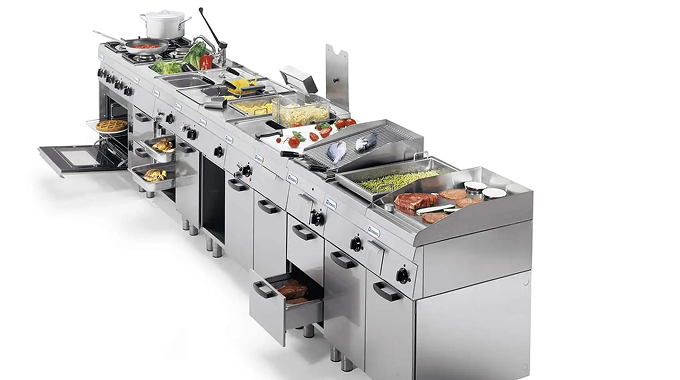
Year-round preventive and corrective maintenance is provided for all commercial kitchen equipment, ensuring maximum reliability, safety, and hygiene. The service includes scheduled quarterly inspections, deep cleaning of refrigeration and cooking units, calibration of sensors, and testing of gas and electrical safety systems. OEM-grade parts and consumables—such as filters, gaskets, and valve seals—are replaced under the contract with no hidden charges. A 24/7 emergency response guarantee ensures a certified technician arrives within four hours of any breakdown, with labor costs fully covered. After each service, a comprehensive digital report is delivered, detailing diagnostics, performed maintenance, replaced parts, and recommendations for continued performance. Contracts renew automatically on an annual basis unless terminated with 30 days’ written notice.

Quarterly inspections cover ovens, fryers, dishwashers, and chillers with detailed performance checks, along with gas leak detection and electrical grounding tests to guarantee safe and reliable kitchen operations.
Cooktops, fryers, filters, and drains receive deep cleaning, while condensation trays and extractor hoods are sanitized to eliminate grease buildup and ensure compliance with food-safety standards.
Motors, hinges, fan assemblies, and valves are lubricated, while belts and seals are inspected or replaced as needed to minimize wear, reduce noise, and extend equipment life.
Filters, burners, thermostats, and gaskets are replaced with OEM-grade or equivalent components to maintain manufacturer compliance, system reliability, and consistent performance.
Refrigerant pressure levels, gas valves, and leak detection tests are performed to optimize temperature control, boost kitchen efficiency, and ensure safe operation.
A secure online portal records system readings, completed maintenance, replaced parts, and recommendations—accessible to clients for full transparency after every service visit.

Annual Maintenance Contract (AMC) for Kitchen Equipments helps restaurants and hotels ensure peak performance and hygiene. Regular servicing, part replacements, and preventive care reduce downtime, extend equipment life, and optimize operational efficiency for smooth kitchen workflows.

Improving cooling efficiency, product visibility, and energy savings across commercial refrigeration environments.

Ensuring safe transport of temperature-sensitive cargo with tailored retrofit and maintenance solutions designed for large-scale facilities.

Delivering energy-efficient upgrades and retrofits that enhance kitchen safety, streamline operations, and improve overall guest comfort.

Providing consistent temperature control and hygienic environments through dependable system upgrades and replacements.

Custom retrofit solutions designed to lower operating costs, improve airflow, and maintain equipment safety under demanding conditions.


Commercial kitchen maintenance can include equipment inspection, performance testing, deep cleaning, lubrication, safety checks, component replacement and refrigeration or gas-system assessment. The exact scope depends on the equipment portfolio. A comprehensive maintenance programme should cover ovens, fryers, dishwashers, chillers, refrigeration equipment and other critical appliances used in the kitchen.
High-use equipment such as ovens, fryers, refrigeration units, chillers, dishwashers, exhaust systems and food-preparation appliances should receive scheduled inspections. Equipment involving gas, electricity, heat or refrigeration deserves particular attention because failures can affect safety, food quality and business continuity.
Repair is suitable when the fault is isolated and the equipment remains reliable. Retrofit may make sense when an older appliance can be upgraded with modern components to improve efficiency or performance. Replacement is generally more appropriate when equipment fails repeatedly, consumes excessive energy, becomes difficult to support or can no longer meet operational requirements.
Preventive maintenance identifies worn components, electrical faults, gas issues, temperature-control problems and other defects before they cause unexpected failure. Planned servicing also allows replacement parts and labour to be scheduled around operating hours. This is particularly valuable for restaurants and hotels where equipment downtime can directly disrupt food preparation and service.
Frequent breakdowns, rising energy consumption, inconsistent temperatures, unsafe operation, obsolete components, poor performance and escalating repair costs are common warning signs. If the equipment can no longer meet production requirements or food-safety expectations, replacement may provide better long-term value than continuing with repeated repairs.
In some cases, yes. Depending on the appliance, upgrades may include improved controls, motors, thermostats, refrigeration components, seals or other compatible parts. The feasibility depends on the equipment's age, condition, design and manufacturer support. A technical assessment should establish whether retrofit or replacement offers the better lifecycle outcome.
Inspection frequency should reflect equipment type, operating hours, usage intensity and manufacturer recommendations. High-volume kitchens may require more frequent checks than low-use facilities. Thermodynamics' current kitchen-equipment service model uses scheduled quarterly inspections alongside preventive and corrective maintenance.
Commercial kitchen service can cover preventive maintenance, corrective repairs, equipment retrofits, component replacement, cleaning, safety checks and refrigeration support. Restaurants and hotels can structure these services around their equipment portfolio and operating requirements, helping maintain kitchen reliability, hygiene and continuity.
Cost varies according to equipment type, number of appliances, condition, required parts, labour, site access and whether the work involves repair, retrofit or full replacement. An AMC can provide a more predictable maintenance budget, while major replacement projects require equipment-specific assessment and quotation.
Selection should consider production volume, operating hours, available space, energy consumption, cleaning requirements, safety, serviceability, spare-parts availability and expected lifecycle cost. For restaurants and hotels, equipment should also be matched to menu requirements and workflow rather than selected only on purchase price.
Next-Gen Cooling. Made for Saudi
Environments.
We provide advanced commercial cooling solutions that reduce emissions and drive energy-efficient, sustainable performance.
Tell us more about yourself and what
you have got in mind.
Our Solutions
Certificates
ISO 9001
ISO 14001
ISO 45001

ICV

 UAE
UAE
 Oman
Oman
 Qatar
Qatar
 KSA
KSA
 Kuwait
 India
India
Social Media


Certificates
ISO 9001
ISO 14001
ISO 45001
ICV
UAE
KSA
Oman
Kuwait
Qatar
India


