Choosing the right cooling solution is one of the most important decisions for commercial buildings in Saudi Arabia. With rising temperatures, increasing energy costs, and growing sustainability expectations, businesses need air conditioning systems that deliver performance, reliability, and long-term operational efficiency.
The debate around VRF vs split vs package units has become increasingly relevant across offices, retail stores, hotels, warehouses, restaurants, and industrial facilities throughout the Kingdom.
This commercial air conditioning guide explains the differences between these systems, how they work, their advantages, and which option is best suited for your Saudi business.
Why Choosing the Right HVAC System Matters in Saudi Arabia
Saudi Arabia’s climate places enormous demand on cooling infrastructure. Commercial buildings require systems capable of operating efficiently under extreme temperatures while maintaining indoor comfort and energy performance.
Modern businesses now prioritize:
- Energy-efficient commercial AC systems
- Sustainable HVAC systems
- Smart cooling systems for businesses
- Long-term operational savings
- Intelligent temperature control
The selection of an appropriate air conditioning system for commercial operations in Saudi Arabia exerts a direct influence on operational efficiency, energy performance, occupant comfort, and long-term business sustainability.
- Energy consumption
- Maintenance costs
- Employee comfort
- Equipment lifespan
- Sustainability performance
What Is a VRF Air Conditioning System?
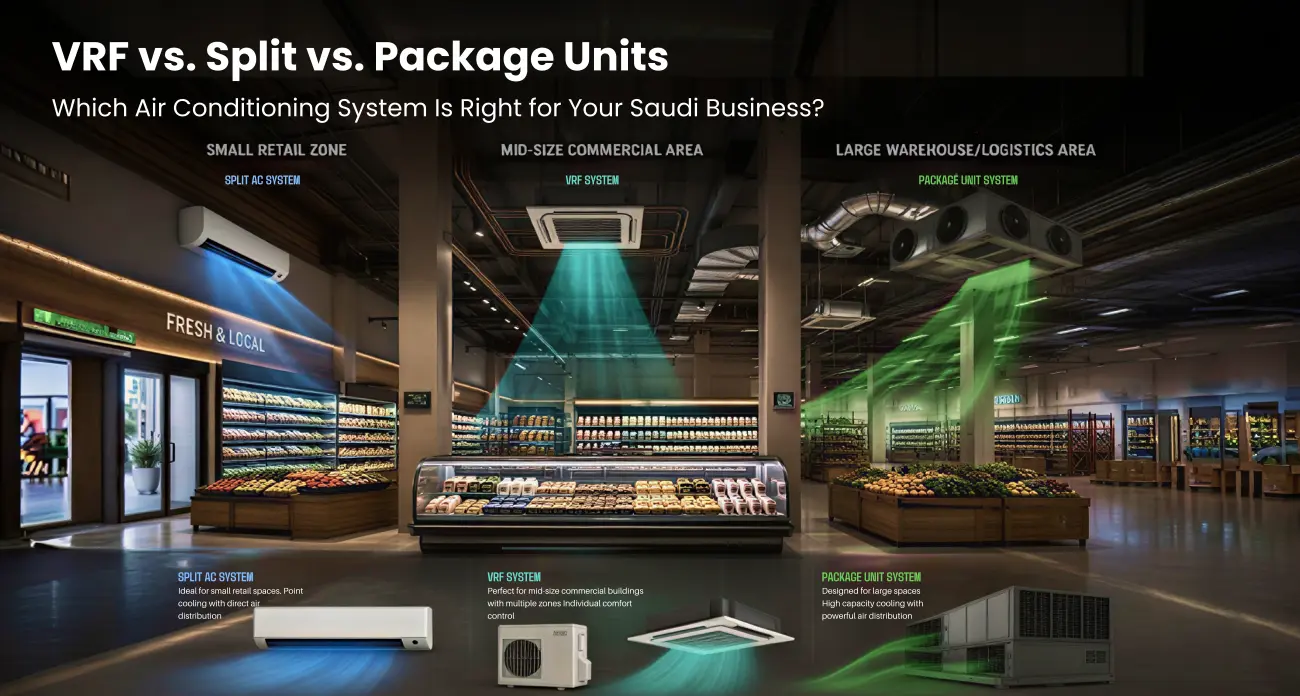
A VRF air conditioning system (Variable Refrigerant Flow) is an advanced cooling solution that adjusts refrigerant flow based on demand in different zones of a building.
How VRF Systems Work
VRF technology uses inverter-driven compressors to regulate cooling capacity automatically. Instead of operating at fixed speeds, the system continuously adjusts performance according to room temperature and occupancy levels.
Key Benefits of VRF Systems
- Exceptional energy efficiency
- Individual zone temperature control
- Quiet operation
- Reduced electricity consumption
- Smart building integration
- Flexible installation design
Because of these advantages, VRF air conditioning systems are increasingly popular in:
- Hotels
- Corporate offices
- Retail stores
- Luxury commercial buildings
How Split Air Conditioning Systems Work
Split air conditioning systems consist of:
- An indoor unit
- An outdoor condenser unit
These systems are commonly used in:
- Small offices
- Retail shops
- Restaurants
- Residential-commercial hybrid spaces
Advantages of Split Systems
- Lower installation cost
- Simple operation
- Easy maintenance
- Suitable for smaller spaces
However, when comparing split AC vs VRF, split systems offer less flexibility and lower energy optimization for large commercial applications.
What Is a Package Unit AC?
A package unit AC combines all cooling components into a single outdoor unit. These systems are widely used in:
- Warehouses
- Factories
- Industrial facilities
- Large commercial halls
Benefits of Package Units
- High cooling capacity
- Centralized cooling performance
- Space-saving rooftop installation
- Lower maintenance complexity
An industrial package unit AC is particularly effective for large open spaces requiring powerful and consistent cooling.
VRF vs Split vs Package Units: Key Differences
| Feature | VRF Systems | Split AC | Package Units |
|---|---|---|---|
| Energy Efficiency | Very High | Moderate | Moderate to High |
| Installation Cost | Higher | Lower | Medium |
| Best For | Offices & hotels | Small businesses | Warehouses & factories |
| Zone Control | Advanced | Limited | Centralized |
| Smart Controls | Excellent | Basic | Moderate |
| Maintenance | Advanced | Simple | Moderate |
Which AC System Is Best for Commercial Buildings?
The best system depends on your building type, cooling load, operational goals, and energy strategy.
Best AC System for Offices in Saudi Arabia
For offices and corporate spaces, energy efficient VRF systems are often the best choice because they provide:
- Individual room control
- Low energy consumption
- Quiet performance
- Smart automation capabilities
HVAC Systems for Retail Stores
Retail businesses require stable cooling to improve customer comfort and preserve products.
Recommended Systems:
- Split systems for small retail outlets
- VRF systems for malls and large retail environments
- Smart supermarket cooling systems for hypermarkets
Hospitality Cooling Solutions
Hotels and restaurants benefit significantly from:
- Hotel VRF systems
- Restaurant air conditioning systems
- Intelligent air conditioning systems
VRF systems allow different rooms to maintain independent temperatures, improving guest comfort and operational efficiency.
Warehouse & Industrial Facilities
For warehouses and manufacturing facilities, industrial package unit AC systems remain highly effective due to:
- High-capacity cooling
- Durable performance
- Centralized airflow distribution
These systems are commonly used in:
- Factory HVAC systems
- Warehouse cooling systems
- Industrial commercial buildings
Energy Efficiency & Smart Cooling Technologies
Modern businesses increasingly prefer:
- Low energy commercial AC systems
- AI-based HVAC systems
- Smart building cooling systems
- Automated HVAC controls
- Predictive maintenance HVAC systems
Why Smart Cooling Matters
Smart HVAC technologies help businesses:
- Reduce electricity costs
- Improve cooling performance
- Monitor system efficiency remotely
- Predict maintenance requirements
- Support sustainability goals
Digital HVAC monitoring platforms are becoming essential for large commercial facilities in Saudi Arabia.
Sustainable HVAC Systems in Saudi Arabia
Sustainability is now a major priority across the Middle East. Businesses are investing in:
- Green HVAC technologies
- Inverter air conditioning systems
- Energy-efficient cooling infrastructure
Modern commercial HVAC systems Saudi Arabia now focus on:
- Lower carbon emissions
- Reduced power consumption
- Improved thermal efficiency
These improvements help organizations meet environmental regulations and long-term operational targets.
Cost Considerations: Which System Offers Better Value?
Split Systems
✔ Lower upfront cost
✔ Suitable for small businesses
VRF Systems
✔ Higher initial investment
✔ Significant long-term energy savings
Package Units
✔ Cost-effective for large industrial spaces
✔ High cooling capacity
When evaluating VRF system cost for office buildings or package unit AC price Saudi Arabia, businesses should consider lifetime operating costs rather than installation cost alone.
Importance of Professional HVAC Installation
Partnering with an experienced commercial HVAC installation company such as Thermodynamics Saudi, a trusted VRF system supplier in Saudi Arabia, package unit installation specialist in Riyadh, and professional HVAC contractor serving Jeddah, is essential for ensuring system reliability, operational efficiency, and long-term cooling performance.
Improper installation can reduce cooling performance and increase operational costs significantly.
HVAC Maintenance & Operational Reliability
Regular maintenance remains essential for all cooling systems.
Professional HVAC maintenance services help:
- Improve efficiency
- Extend equipment lifespan
- Prevent breakdowns
- Maintain indoor comfort
Many businesses now use:
- HVAC maintenance Saudi Arabia services
- Predictive maintenance HVAC systems
- Smart monitoring technologies
to reduce downtime and improve operational stability.
Final Insight
The decision between VRF vs split vs package units ultimately depends on your business requirements, building structure, operational priorities, and energy goals.
For businesses in Saudi Arabia seeking long-term efficiency, sustainability, and intelligent climate control, modern HVAC technologies provide significant operational advantages.
Investing in the right commercial cooling infrastructure today helps businesses improve comfort, reduce costs, enhance energy performance, and support future-ready commercial operations.
Frequently Asked Questions (FAQs)
What is the difference between VRF and split AC?
VRF systems provide advanced zoning and energy optimization, while split AC systems are simpler and more suitable for smaller spaces.
Which AC system is best for commercial buildings?
VRF systems are ideal for offices and hotels, while package units work well for warehouses and factories.
Are VRF systems energy efficient?
Yes. VRF systems are among the most energy-efficient commercial cooling solutions available today.
What is a package unit AC used for?
Package units are commonly used in industrial buildings, warehouses, and large commercial facilities requiring centralized cooling.