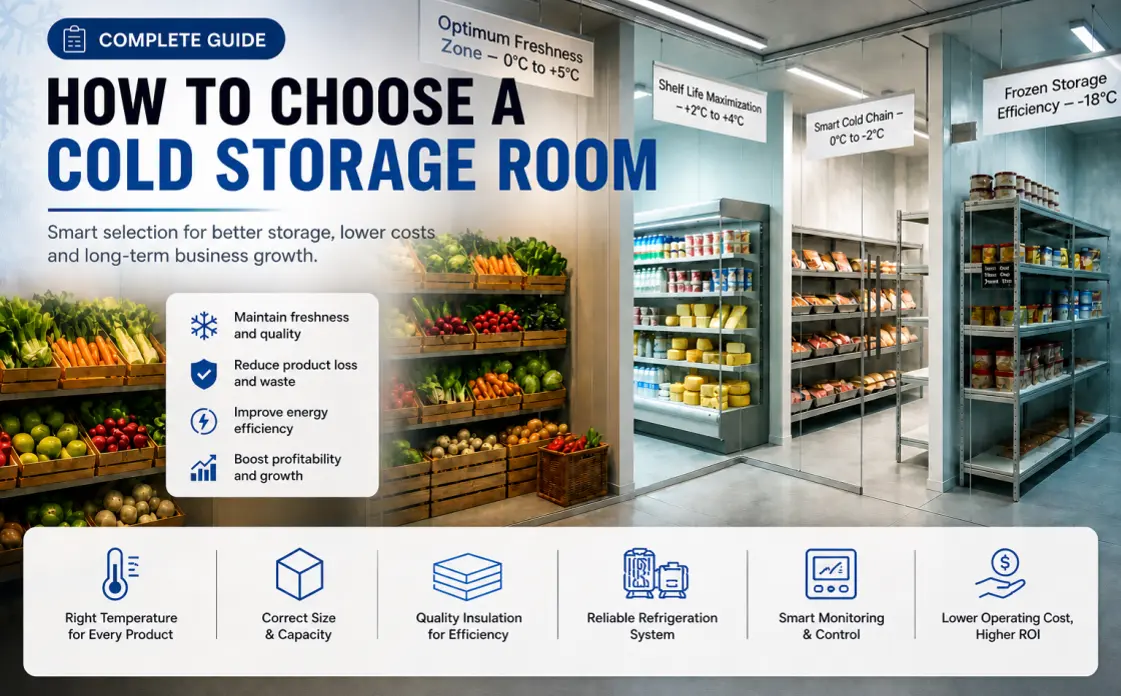
How to Choose a Cold Storage Room : Complete Buying Guide for Businesses
Choosing the right cold storage isn’t just about keeping products cold—it’s about protecting quality, reducing losses, and improving profitability. Whether you run a food business, pharmaceutical unit, or warehouse, this cold storage room selection guide will help you make a confident, future-proof decision.
What Is a Cold Storage Room?
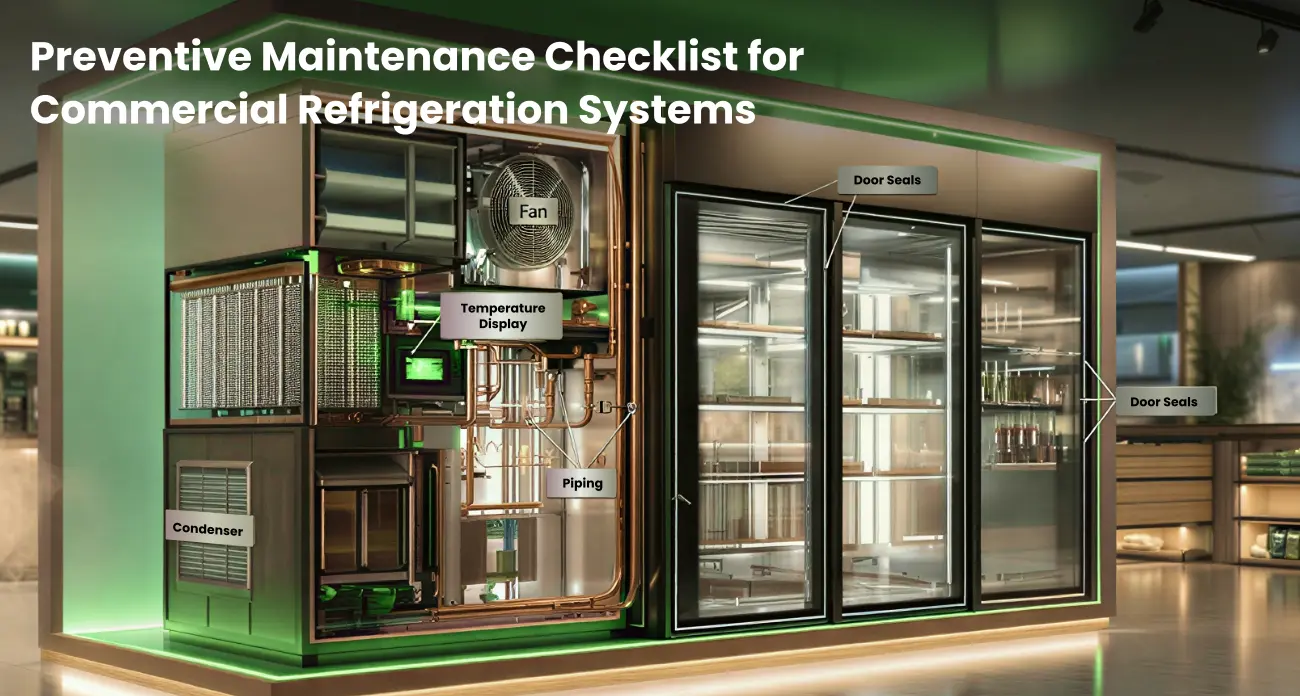
A cold storage room is a temperature-controlled space designed for perishables storage like fruits, dairy, meat, seafood, or medicines. It uses a refrigeration system (evaporator and condenser) along with thermal insulation to maintain a stable environment.
In simple terms: it slows down spoilage, preserves freshness, and ensures compliance with safety standards.
How Cold Storage Works
Cold rooms work on heat transfer:
- The condenser releases that heat outside
- Insulated panels reduce heat ingress and maintain stable temperatures
- A temperature monitoring system ensures consistent cooling
This continuous cycle maintains the required temperature range for cold storage, depending on your product.
Types of Cold Storage Rooms
Understanding types is the first step in choosing cold storage for business:
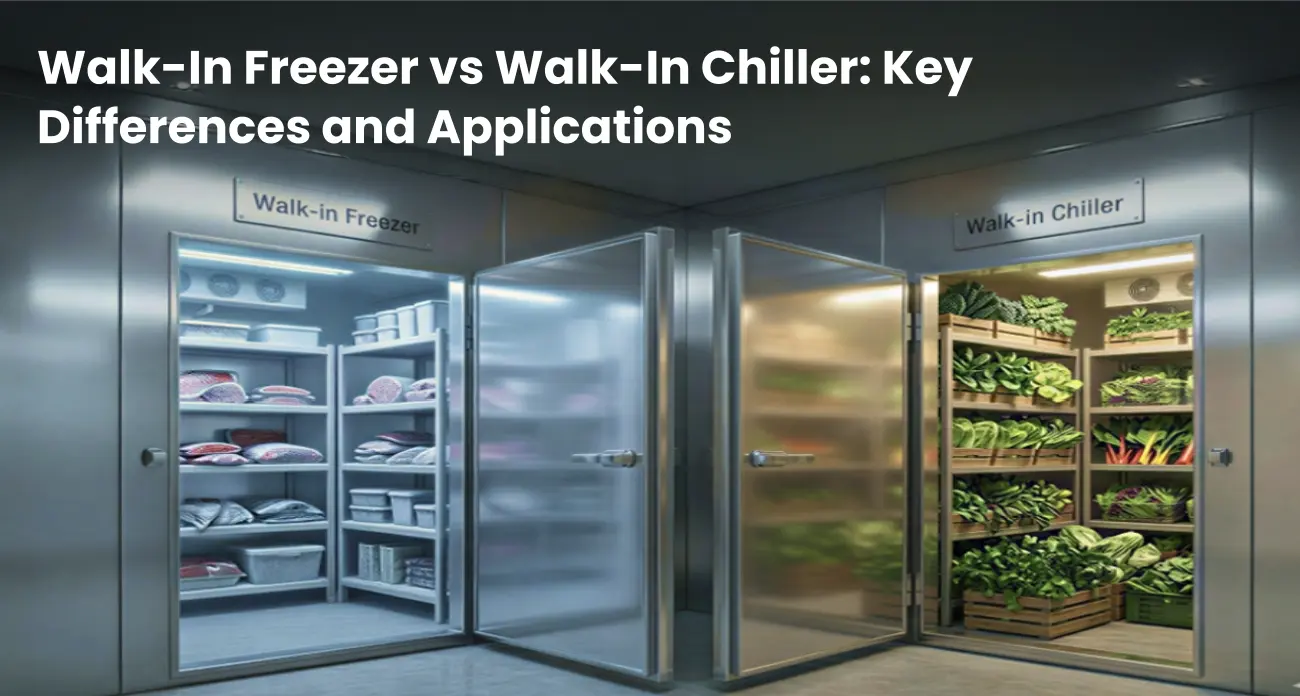
- Chiller Rooms (0°C to 5°C): Fruits, vegetables, dairy
- Freezer Rooms (-18°C to -25°C): Meat, seafood
- Blast Freezers: Rapid freezing for food processing
- Pharmaceutical Cold Rooms: Strict temperature + humidity control
- Warehouse Cold Storage: Large-scale industrial storage
Your selection depends on product sensitivity and storage duration.
Key Factors to Consider Before Choosing
1. Storage Purpose & Industry Needs
Different industries require different setups:
- Cold storage for fruits and vegetables: Controlled humidity + airflow
- Dairy cold storage requirements: Stable cooling (2–4°C)
- Seafood cold storage temperature: Deep freezing (-18°C or below)
- Pharmaceutical cold storage guidelines: Precise temperature monitoring + backup systems
2. Temperature Range & Control
Ask yourself: What temperature should a cold room be set at?
- Fresh produce: 0°C to 5°C
- Frozen goods: -18°C or lower
- Pharma: 2°C to 8°C (strict compliance)
A reliable cold room temperature control system is essential to avoid fluctuations.
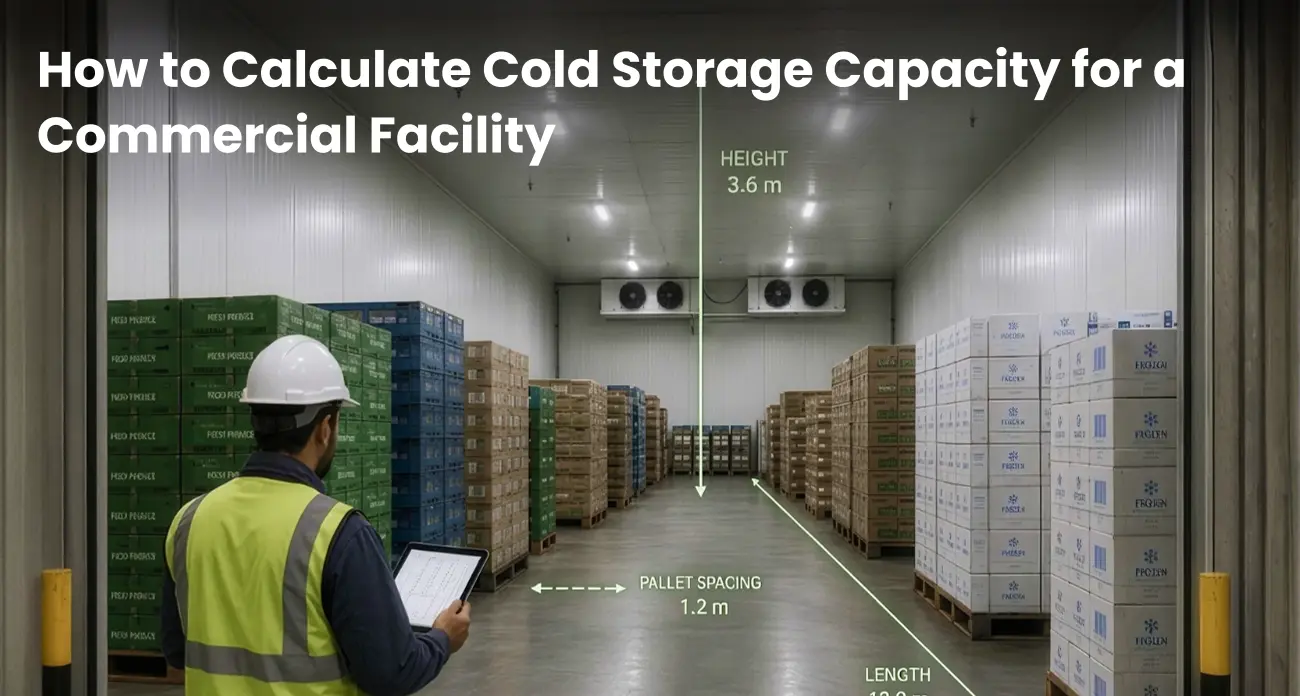
3. Size & Capacity Planning
One of the most common questions: What size cold storage room do I need?
| Consider | Use cold storage room capacity calculation based on |
| Daily inventory volume | Product type |
| Storage duration | Pallet storage or rack system |
| Future scalability | Space for air circulation |
Oversizing increases cost; under sizing leads to operational bottlenecks.
4. Insulation & Panel Quality : High-quality insulation reduces energy loss.
- PU panel cold room benefits:
- Excellent thermal resistance
- Lower energy consumption
- Long durability
- Ideal insulation thickness for cold storage:
- 60–80 mm for chillers
- 100–120 mm for freezers
5. Refrigeration System Efficiency : The heart of your cold room
- Choose between air-cooled or water-cooled systems
- Ensure proper refrigeration load calculation
- Look for energy-efficient compressors
A well-designed system reduces breakdowns and operating costs.
6. Energy Efficiency
To reduce cold storage energy cost, focus on:
- High-quality insulation
- Energy-efficient compressors
- Smart temperature monitoring
- Proper door sealing
Energy efficiency directly impacts your ROI.
7. Doors, Humidity & Airflow
Often overlooked but critical:
- Humidity control in cold storage: Prevents product dehydration
- Proper airflow ensures uniform cooling
Industrial Cold Storage Room Cost in UAE
Understanding the industrial cold storage room cost in the UAE requires looking at size, technology, and the region’s extreme climate demands. The UAE has one of the fastest-growing cold chain markets, driven by food imports, pharmaceuticals, and logistics expansion.
Average Cost of Industrial Cold Storage in UAE
- Cost Per Square Foot
- Cost by Storage Size
- Large-Scale Industrial Investment (Warehouse Level)
Industrial cold storage in the UAE is a high-investment, high-return infrastructure.
You should:
- Focus on energy efficiency + insulation quality
- Choose the right capacity and refrigeration system
- Consider modular/container solutions for cost savings
Always compare cold room installation services and long-term maintenance support.
If you’re still wondering: How do I choose the right cold storage room for my business?
Follow this quick framework:
- Identify product type
- Define temperature range
- Calculate storage capacity
- Choose insulation & refrigeration system
- Evaluate energy efficiency
- Select a trusted supplier
This step-by-step approach simplifies your decision.
Common Mistakes in Cold Storage Selection
Avoid these costly errors:
- Ignoring future expansion needs
- Choosing low-quality insulation
- Underestimating refrigeration load
- Poor ventilation planning
- Not checking supplier credibility
These mistakes often lead to higher operating costs and product loss.
Maintenance & Troubleshooting Tips
To ensure long-term performance:
How to Maintain Cold Storage Room
- Regular cleaning of evaporator coils
- Check door seals and insulation
- Monitor temperature daily
- Schedule periodic servicing
Cold Storage Troubleshooting Guide
- Temperature fluctuation → Check sensors or gas levels
- Ice buildup → Inspect airflow or defrost system
- High energy bills → Review insulation and compressor efficiency
Consistent maintenance prevents downtime.
Why Cold Storage Temperature Fluctuates
Common reasons include:
- Poor insulation
- Frequent door opening
- Faulty temperature sensors
- Overloading storage capacity
Fixing these ensures product safety and compliance.
Choosing the Right Cold Storage Solution for Every Business Size
The effectiveness of your cold storage isn’t defined by size alone—it’s defined by how well it aligns with your business stage and growth trajectory. Whether you’re starting small or operating at scale, the right choice can significantly improve efficiency, reduce waste, and strengthen your bottom line.
- Small business: Modular cold rooms (cost-effective, scalable)
- Medium business: Walk-in cold storage rooms
- Large industries: Industrial cold storage warehouses
Make your decision with future expansion in mind, not just your immediate requirements.
Final Thoughts
Choosing a cold storage room is a strategic investment, not just a purchase. The right decision ensures:
- Product safety
- Reduced wastage
- Lower operational cost
- Long-term business growth
If you focus on capacity, temperature control, insulation, and energy efficiency, you’ll select a system that delivers consistent performance and ROI.
FAQs
1. How to choose a cold storage room?
Identify what you’re storing, set the required temperature range, estimate storage capacity, and choose a system with strong insulation and energy-efficient refrigeration.
2. What size cold room do I need?
It depends on your daily inventory, storage duration, product type, and expected business growth. Always allow extra space for airflow and future expansion.
3. What temperature should a cold room be set at?
Fresh products typically require 0–5°C, while frozen items need -18°C or lower. The exact setting depends on product sensitivity and shelf-life requirements.
4. Which cold storage is best for small businesses?
Modular cold rooms are ideal because they are cost-effective, easy to install, and can be expanded as your business grows.
5. How to reduce cold storage energy cost?
Use high-quality insulation, energy-efficient compressors, proper door sealing, and smart temperature monitoring to minimize power consumption.