



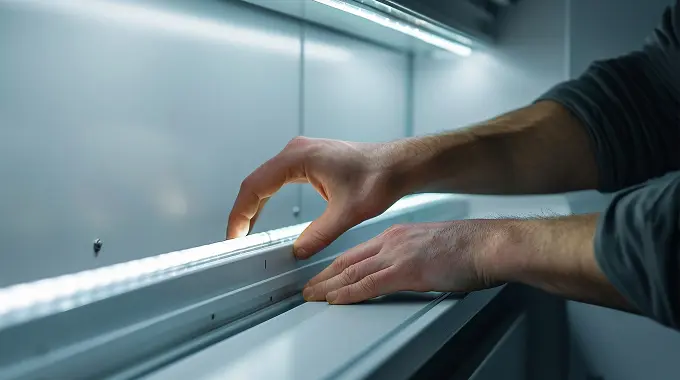
LED retrofits improve sustainability by maximizing thermodynamic efficiency, reducing heat, and lowering carbon footprints. Unlike traditional bulbs that waste energy as heat, LEDs deliver higher luminous efficiency, cut cooling demands, and ease HVAC strain in commercial and industrial spaces. Their lower heat output further optimizes air conditioning and refrigeration energy performance. Upgrade your space with LED lights retrofit solutions, designed for efficiency and sustainability. Our retrofit lights and LED tubes seamlessly replace old fixtures, cutting energy costs while delivering bright, long-lasting illumination. Ideal for homes, offices, and industrial spaces, these retrofits combine easy installation with modern design, ensuring eco-friendly, cost-effective lighting without compromising quality. Transform any space instantly with reliable, high-performance LED retrofits.

Operating at cooler temperatures with high luminous efficiency, LED lighting eases pressure on HVAC systems in industrial and commercial environments.
Consuming up to 80% less energy, LEDs reduce power use and thermal emissions, lowering overall cooling requirements.
Advanced heat-sink designs enhance dissipation, extending product life and improving operational reliability.
By minimizing heat generation, LED solutions reduce extra cooling needs, optimizing air conditioning and refrigeration energy efficiency.
Reduced power use and minimal heat waste lower greenhouse gas emissions, advancing global energy goals. LED retrofits in commercial and industrial spaces cut costs, boost sustainability, and enhance environmental performance while optimizing thermodynamic efficiency.

LED Lights Retrofits under Service & Retrofits upgrade outdated lighting systems with energy-efficient solutions. They reduce power consumption, lower maintenance costs, and improve illumination, making them ideal for commercial, retail, and industrial spaces focused on sustainability.

Enhanced cooling efficiency, better product visibility, and consistent performance in commercial refrigeration environments.

Reliable retrofit and maintenance solutions safeguard temperature-sensitive cargo in large-scale operations.

Energy-efficient upgrades ensure smooth kitchen workflows, equipment safety, and superior guest comfort.

Consistent temperatures and cleaner environments are maintained with modern, efficient system replacements.

Tailored retrofit solutions cut operating costs, improve airflow, and guarantee system safety under heavy-duty use.


An LED lighting retrofit upgrades existing lighting fixtures with energy-efficient LED lamps, tubes or luminaires instead of replacing the entire electrical infrastructure. It can improve illumination while reducing electricity consumption, maintenance requirements and heat generation. For commercial and industrial facilities, the lower heat output can also reduce the cooling load on HVAC systems.
Energy savings depend on the existing lighting technology, operating hours, fixture wattage and replacement design. The current service information states that LED retrofits can consume up to 80% less energy than conventional lighting. A site assessment should be used to calculate the expected savings for a specific facility rather than applying one percentage to every project.
Yes, many existing lighting systems can be upgraded with compatible LED retrofit lamps, tubes or luminaires without major structural changes. However, compatibility should be checked before installation, including fixture dimensions, electrical configuration, drivers, voltage and mounting requirements. The appropriate retrofit approach depends on the condition and type of the existing lighting system.
An LED retrofit is often appropriate when existing fixtures are structurally usable but the lamps are inefficient, maintenance-intensive or produce excessive heat. Full replacement may make more sense when fixtures are damaged, obsolete or unsuitable for the required lighting level. A lighting audit can compare retrofit cost, energy savings, maintenance and expected payback before a decision is made.
Traditional lighting releases a significant proportion of consumed electricity as heat. LEDs operate more efficiently and generate less waste heat, which reduces the additional heat that air-conditioning systems must remove. In commercial and industrial facilities operating for long hours, this can complement HVAC efficiency improvements and reduce the overall cooling requirement.
LED retrofits are particularly relevant to offices, warehouses, retail stores, supermarkets, cold-chain facilities, hospitality properties, healthcare facilities and manufacturing plants. Facilities with long operating hours and large numbers of lighting fixtures generally have greater opportunities to reduce electricity and maintenance costs.
Project duration depends on the number of fixtures, facility size, working-hour restrictions, ceiling access, electrical modifications and installation method. A smaller commercial project may be completed quickly, while a large industrial facility may require phased installation to avoid disrupting operations. A site survey is therefore necessary to establish an accurate implementation schedule.
The cost depends on the number and type of fixtures, LED wattage, lighting levels, installation requirements, electrical modifications, access conditions and operating schedule. Additional savings can come from reduced electricity consumption and maintenance. For an accurate project estimate, the existing lighting system should be assessed and compared with the proposed LED design.
Yes. A properly designed LED retrofit can improve illumination uniformity, colour quality, visibility and fixture performance while reducing energy consumption. The specification should consider lumen output, colour temperature, colour rendering, beam distribution and the requirements of the space rather than selecting LEDs based solely on wattage.
ROI should be calculated using the project cost against expected annual electricity and maintenance savings. Key inputs include existing and proposed wattage, operating hours, electricity tariff, fixture quantity, maintenance costs and installation expenditure. The resulting payback period shows how long it may take for the retrofit savings to recover the initial investment.
Next-Gen Cooling. Made for Saudi
Environments.
We provide advanced commercial cooling solutions that reduce emissions and drive energy-efficient, sustainable performance.
Tell us more about yourself and what
you have got in mind.
Our Solutions
Certificates
ISO 9001

ISO 14001
ISO 45001

ICV
 UAE
UAE
 Oman
Oman
 Qatar
Qatar
 KSA
KSA
 Kuwait
 India
India

Social Media


Certificates
ISO 9001
ISO 14001
ISO 45001
ICV
UAE
KSA
Oman
Kuwait
Qatar
India


