



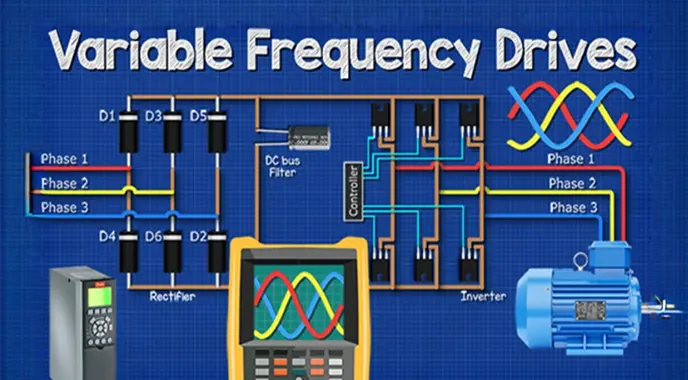
Variable Frequency Drive (VFD) installation plays a critical role in optimizing motor performance, reducing energy consumption, and extending equipment life. A properly installed VFD ensures smooth motor control, precise speed adjustment, and reduced mechanical stress, leading to lower operational costs and improved reliability. Key factors in VFD installation include correct wiring and grounding to minimize electrical noise, motor compatibility checks, and integration of protective devices such as circuit breakers and overload relays. Proper placement with adequate ventilation safeguards against dust, heat, and moisture, ensuring long-term stability. Parameter programming tailored to application requirements—such as torque, acceleration, and speed—further enhances system efficiency. Professional VFD installation not only prevents costly failures but also supports sustainability goals by optimizing energy use and extending asset lifespan.

Comprehensive installation services for cable connections and grounding are essential to ensure safe, reliable, and energy-efficient electrical systems. Proper cable termination and secure grounding minimize electrical noise, prevent system faults, and safeguard equipment from overloads or short circuits. Professional installation ensures compliance with safety standards, reduces downtime, and enhances overall system performance. By integrating advanced grounding methods and precision wiring techniques, businesses can achieve long-term stability, operational efficiency, and maximum protection for critical assets.
Key considerations for VFD installation include proper wiring, grounding, and motor compatibility to ensure safe and efficient operation. Correct placement with adequate ventilation protects the drive from dust, heat, and moisture, extending its lifespan. Integration of protective devices such as circuit breakers, fuses, and overload relays safeguards against faults and system failures. Parameter programming tailored to speed, torque, and acceleration requirements enhances performance and energy efficiency. By focusing on these factors, businesses can optimize motor control, reduce downtime, and achieve long-term reliability.
VFD systems may face issues from unstable power, wiring faults, or motor failures. Using overload relays prevents single-phasing damage, while advanced temperature monitoring ensures reliable motor protection.

VFD Installation under Service & Retrofits boosts energy efficiency and equipment performance by controlling motor speed. Ideal for HVAC, refrigeration, and industrial systems, VFDs reduce operating costs, extend equipment life, and provide smarter, more sustainable operations.

Optimizing cooling efficiency, product visibility, and overall energy savings in commercial refrigeration environments.

Protecting temperature-sensitive cargo with tailored retrofit and maintenance solutions for reliable performance in large-scale facilities.

Energy-efficient retrofits and upgrades designed to enhance kitchen safety, streamline operations, and deliver superior guest comfort.

Ensuring stable temperatures, hygienic environments, and reliable performance with efficient system upgrades and replacements.

Custom retrofit solutions engineered to cut operating costs, improve airflow, and enhance equipment safety under heavy-duty conditions.


VFD installation involves connecting a variable frequency drive to a compatible electric motor so its speed can be adjusted according to the required load. Instead of operating continuously at full speed, the motor can use only the speed needed for the application. This can reduce electricity consumption, improve process control and reduce mechanical stress in suitable variable-load systems.
VFDs are particularly useful for variable-load motors such as fans, pumps and certain compressor applications where motor speed can be adjusted according to demand. HVAC air-handling units, chilled-water pumps, condenser fans and other suitable equipment may benefit. The motor and driven equipment must be checked for VFD compatibility before installation.
Energy savings depend heavily on the motor's load profile, operating hours, required speed range and control strategy. Variable-load applications can offer significant savings because reducing motor speed can substantially reduce power demand. A site measurement of actual operating conditions should be used to estimate savings instead of applying a universal percentage.
Yes, many existing motor-driven HVAC and refrigeration applications can be upgraded with a VFD if the motor, drive, controls and driven equipment are compatible. Engineers should verify motor specifications, operating range, cooling method, electrical supply, load characteristics and control requirements before installation.
A VFD is worth considering when the existing motor is suitable but frequently operates below full load or requires variable-speed control. Motor replacement may be necessary when the motor is damaged, inefficient or incompatible with the required application. In some cases, combining a high-efficiency motor with a correctly sized VFD provides the best lifecycle result.
A VFD varies the frequency and voltage supplied to a compatible motor, allowing its rotational speed to be adjusted. A control signal from sensors, thermostats, building-management systems or process controls can determine the required speed. The motor can therefore respond more closely to actual airflow, pressure, temperature or cooling demand.
The motor rating, voltage, current, phase, frequency, load profile, operating speed, enclosure, cooling method and driven equipment should be checked. Electrical infrastructure, control signals, harmonics, cable length, protection and environmental conditions should also be considered. Correct VFD sizing and commissioning are essential for safe and reliable operation.
Yes. Where a motor operates under variable load, reducing its speed when full capacity is unnecessary can lower electricity consumption. VFDs can also improve process control and reduce mechanical stress. The financial benefit depends on operating hours, load variation, motor size, electricity tariff and the actual speed reduction achieved.
VFD installation costs depend on motor rating, drive capacity, control requirements, electrical modifications, enclosure, installation complexity and commissioning. Additional equipment such as bypass arrangements, harmonic mitigation or monitoring may also affect the project cost. A site survey and motor assessment are recommended before preparing a quotation.
ROI can be estimated by comparing the VFD project cost with annual electricity savings and other operational benefits. The calculation should include motor power, operating hours, average load, speed profile, electricity tariff, installation cost and expected maintenance savings. Variable-load applications generally offer greater opportunities for measurable energy savings.
Next-Gen Cooling. Made for Saudi
Environments.
We provide advanced commercial cooling solutions that reduce emissions and drive energy-efficient, sustainable performance.
Tell us more about yourself and what
you have got in mind.
Our Solutions
Certificates

ISO 9001

ISO 14001

ISO 45001

ICV
 UAE
UAE
 Oman
Oman
 Qatar
Qatar
 KSA
KSA
 Kuwait
 India
India

Social Media


Certificates
ISO 9001
ISO 14001
ISO 45001
ICV
UAE
KSA
Oman
Kuwait
Qatar
India


